vii
Exceptional natural beauty
Forested dunes, lake systems, papyrus wetlands and an unbroken shoreline — scenery of the first rank, still largely as it has always been.


iSimangaliso is an isiZulu word for something wondrous. It became South Africa’s first UNESCO World Heritage Site in 1999 — and remains one of the few places on earth where five ecosystems meet inside a single boundary.
1999
Inscribed by UNESCO — South Africa’s first World Heritage Site
220 km
Of coastline, from Maphelane to the Mozambique border
520+
Bird species recorded inside the Park
99%
Of the Park’s land was under claim at proclamation
Background
iSimangaliso protects an extraordinary range of habitats in northern KwaZulu-Natal — ocean and coral reef, coastal dune and forest, lake and wetland, savannah and grassland. Several of its wetlands are listed under the Ramsar Convention, recognising their global importance to biodiversity.
It is often described as a place where the miracles of nature converge, and the roll call earns it: the leatherback, the largest nesting sea turtle; Africa’s largest hippo population; the coelacanth, the world’s oldest living fish, in the submarine canyons off Sodwana Bay; rhino, elephant and lion; and migrating humpback whales offshore each winter. More than 520 bird species have been recorded, among them seasonal visitors from Europe and Asia such as the ringed plover, sandpiper and little stint.

Africa’s southernmost coral reefs lie inside the Park’s marine protected area.
Outstanding Universal Value
World Heritage Sites are judged against ten criteria. iSimangaliso was inscribed on three of the four natural criteria — a rare distinction recognising scenic beauty, ongoing ecological process and biodiversity together.
vii
Forested dunes, lake systems, papyrus wetlands and an unbroken shoreline — scenery of the first rank, still largely as it has always been.
ix
Shifting salinity in Lake St Lucia, dune formation, coastal dynamics and the seasonal migrations that continue to shape the system.
x
Habitat for a remarkable concentration of species, including several found nowhere else on earth and many listed as threatened.

Tourism inside the Park funds conservation and employs the communities around it.
A human story
Archaeological evidence shows people have lived in and around this landscape for thousands of years. iSimangaliso is a cultural site as much as an ecological one.
When the Park was proclaimed, an overwhelming 99% of its land was under claim. Many protected areas would have treated that as an obstacle. iSimangaliso treated it as the design brief: land claim settlements were built into how the Park is governed, and communities became beneficiaries and co-managers rather than neighbours held outside a fence.
Crafters, cultural performers, guides, camp operators and small tourism businesses now trade off the Park’s reputation. That model — conservation that pays a local wage — is why iSimangaliso is studied internationally as much for its governance as for its biodiversity.
Milestones
Among Africa’s earliest protected areas
Formal protection begins around the St Lucia lake system, making this one of the oldest conservation landscapes on the continent.
Inscribed as South Africa’s first World Heritage Site
UNESCO lists the property on three natural criteria, recognising its scenic beauty, its living ecological processes and its biodiversity.
The Authority is established
The iSimangaliso Wetland Park Authority is constituted under the World Heritage Convention Act, 1999 to protect, present and develop the Park for public benefit.
The Park is renamed iSimangaliso
The Greater St Lucia Wetland Park takes an isiZulu name meaning miracle and wonder — restoring local language and ownership to a place long described in other people’s words.
Lion return to the Eastern Shores
Lions are reintroduced after decades of absence, part of a wider programme restoring the Park’s full complement of large game.
The marine protected area is expanded
iSimangaliso’s marine component grows into South Africa’s largest marine protected area, and the country’s only marine World Heritage Site.
A transboundary World Heritage Site
On 13 July 2025 in Paris, the World Heritage Committee approved extending the property to include Mozambique’s Maputo National Park. The combined iSimangaliso Wetland Park – Maputo National Park covers close to 400,000 hectares across two countries.
Across the border
The 2025 extension recognised what the ecology always knew: the dunes, reefs and turtle beaches do not stop at the Kosi Bay border post.
Mozambique’s Maputo National Park adds roughly 154,000 hectares to South Africa’s existing property, creating a transboundary World Heritage Site of nearly 400,000 hectares. The IUCN has described the extended area as one of the most outstanding coastal wetlands in Africa. For iSimangaliso it means shared stewardship of migratory species, connected marine habitat, and a conservation economy that reaches communities on both sides of the line.

Mission Rocks — the coastline runs unbroken north to the Mozambique border.

A World Heritage Site where wonders never end.
iSimangaliso Wetland Park
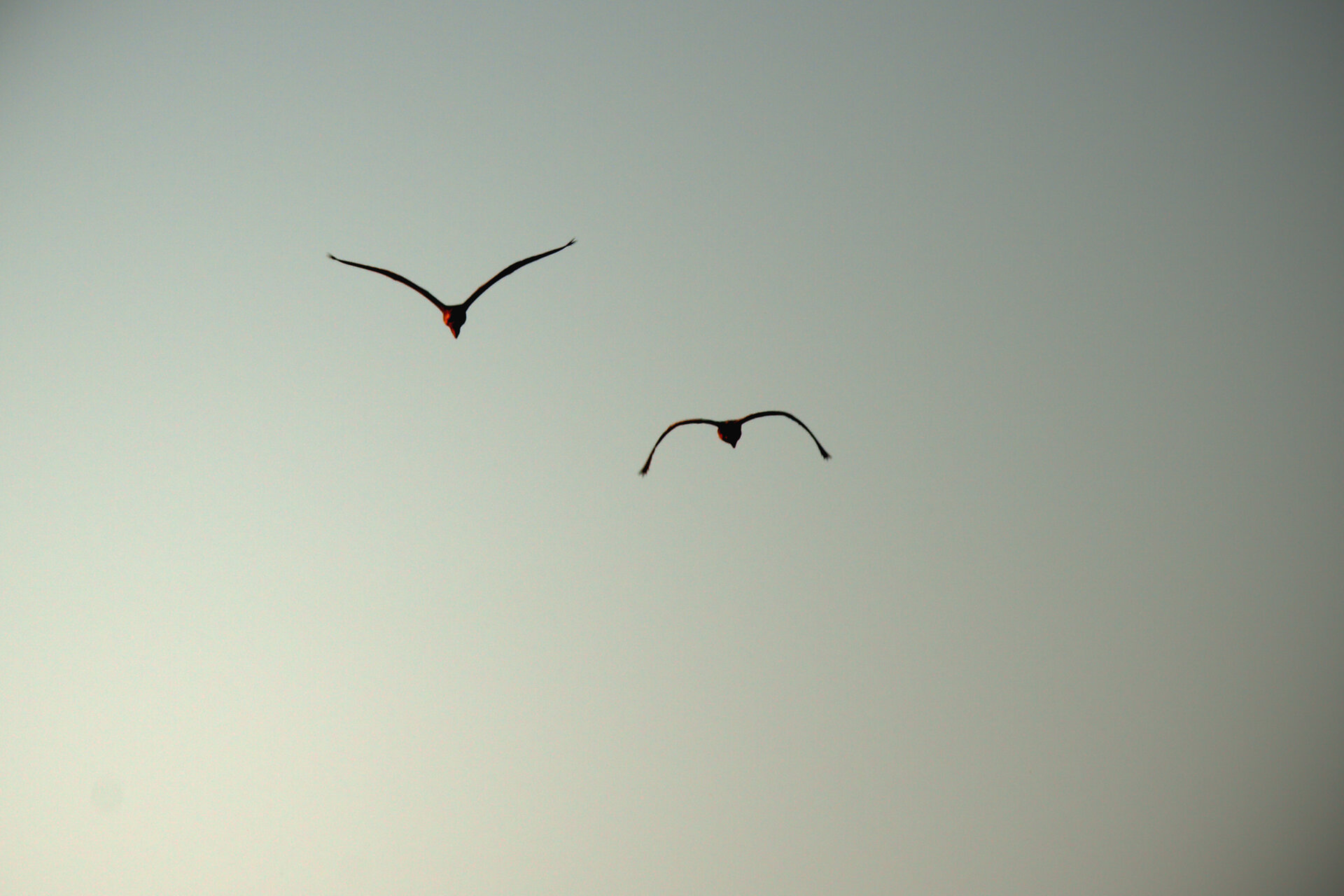
More than 520 bird species have been recorded across the Park’s wetlands, grasslands and forests — one of the richest counts anywhere in South Africa, and a large part of why iSimangaliso draws birders from across the world.
From bursaries and enterprise grants to environmental education and the GEF-7 biodiversity economy project, iSimangaliso’s history is still being written by the communities around it.
Every year iSimangaliso welcomes visitors from all over the world.
@RicardoBowie
A truly stunning and natural environment. iSimangaliso Wetland Park is a natural treasure of epic proportions. A 2-3 hours drive from Durban takes you to a piece of nature that has been frozen in time and preserved.
Rome, Italy 695 contributions
We did the whole park including the small detours and we were very lucky: we saw elephants, water buffalo, a leopard!!!, rhinos!!!!, an incredible amount of birds, warthogs, dikdiks and other animals whose names we do not know (but see photos). Truly an incredible experience
@lesley0271
Cape Vidal is a must visit and offers beautiful and safe snorkelling during low tide! En-route from St Lucia we saw wild animals en enjoyed the various viewing loops the park has to offer.
A renowned World Heritage Site where wonders never end.